









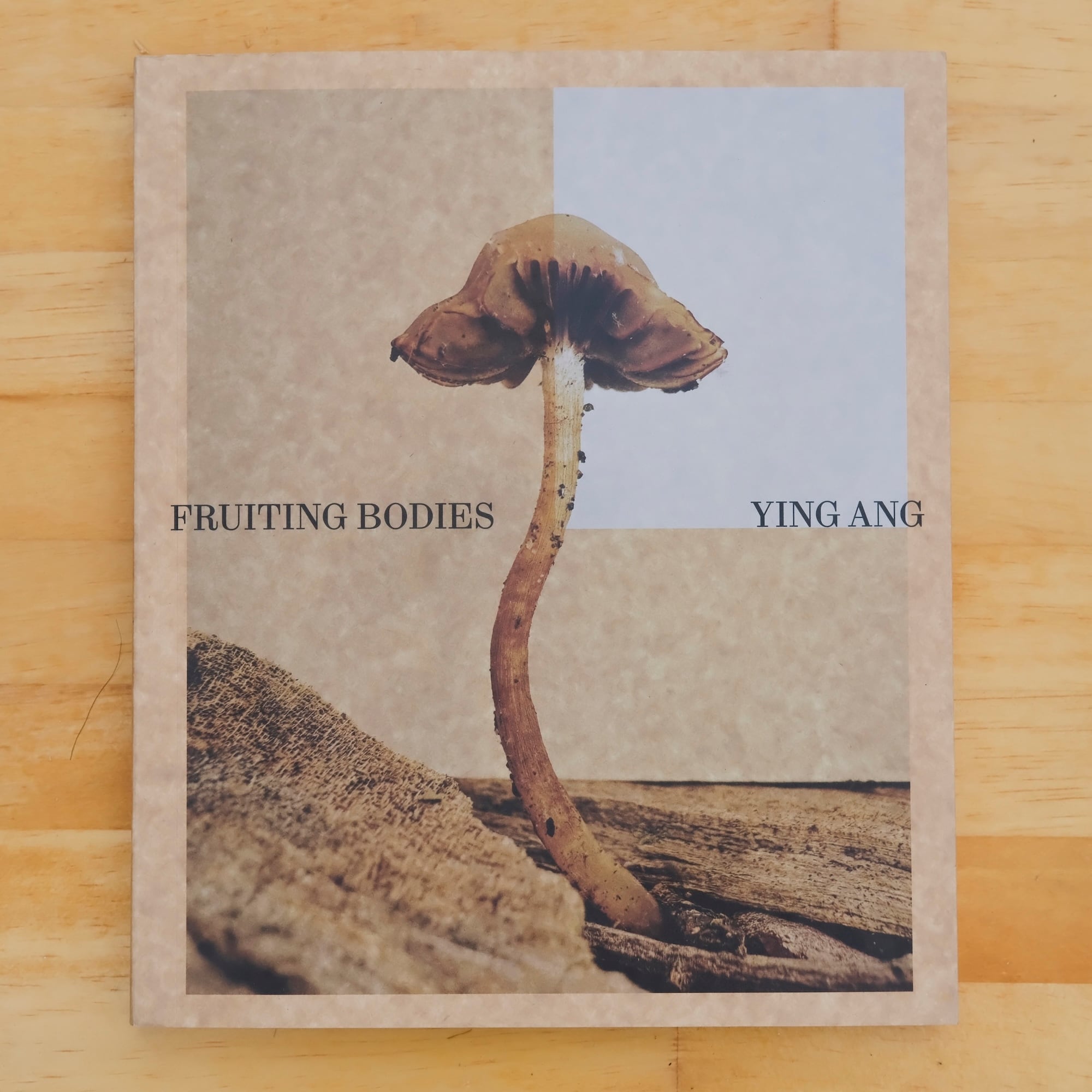
Fruiting Bodies by Ying Ang
¥8,800($56.49)
International shipping available
オーストラリア・メルボルンを拠点に活動するアーティスト、イン・アンによる写真集。
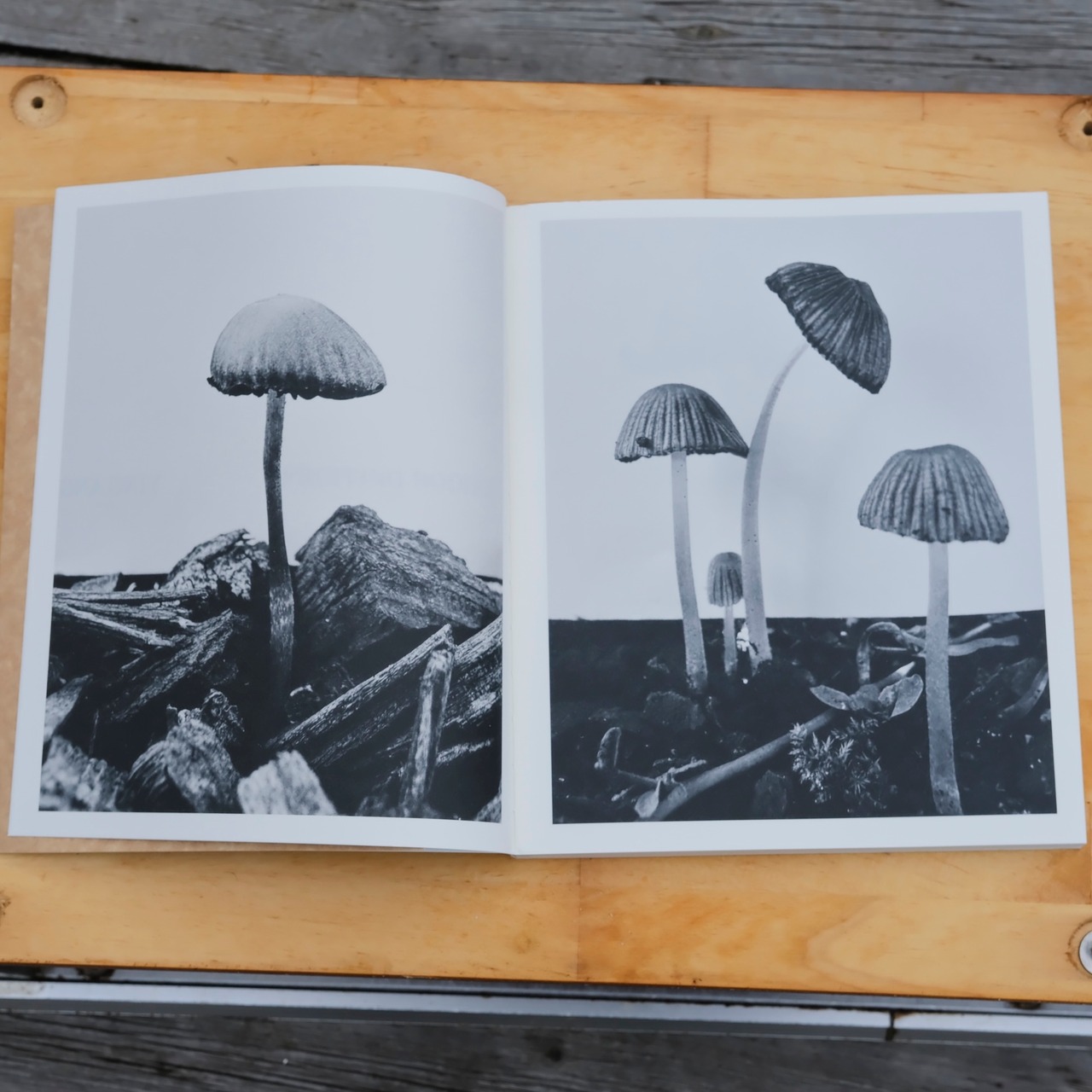
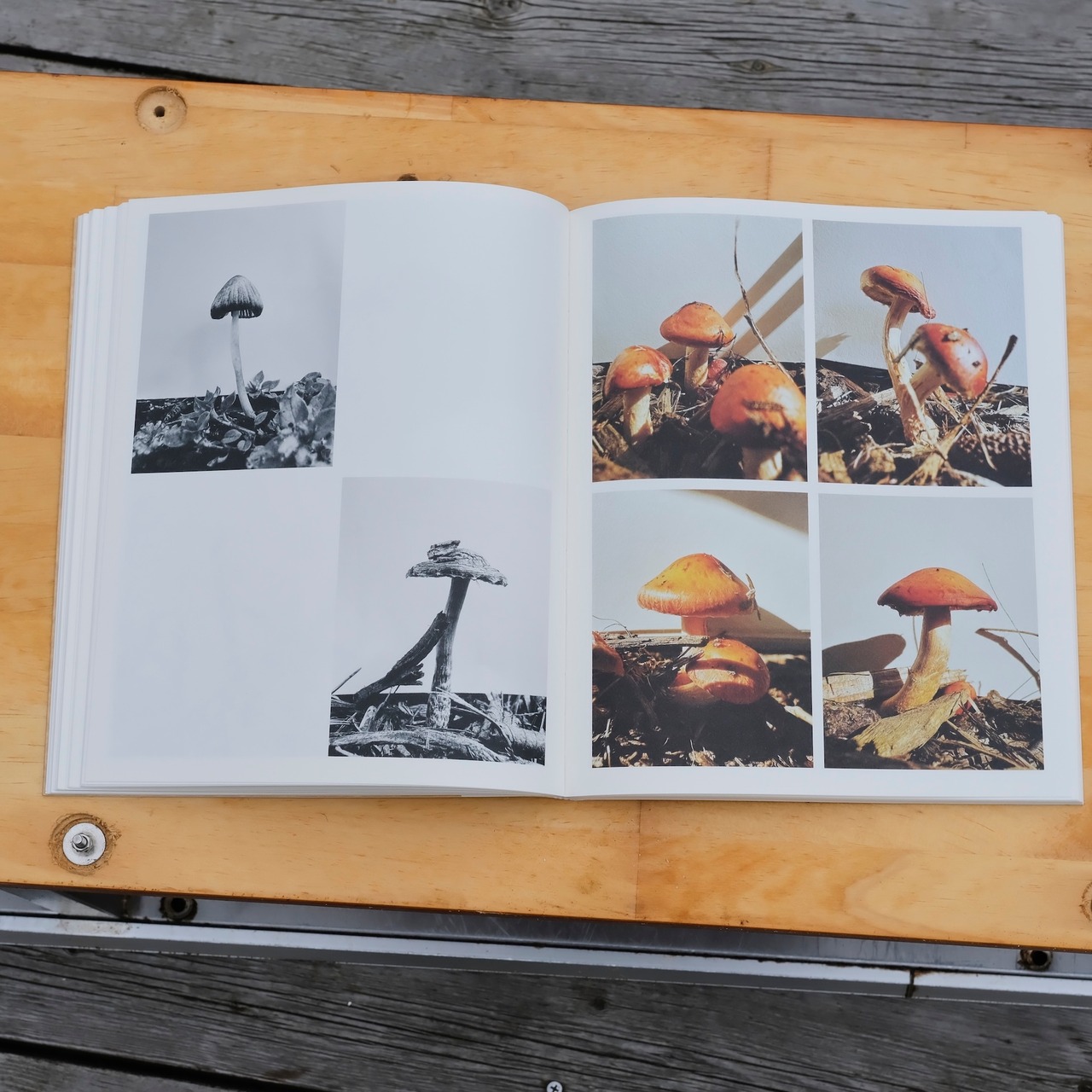
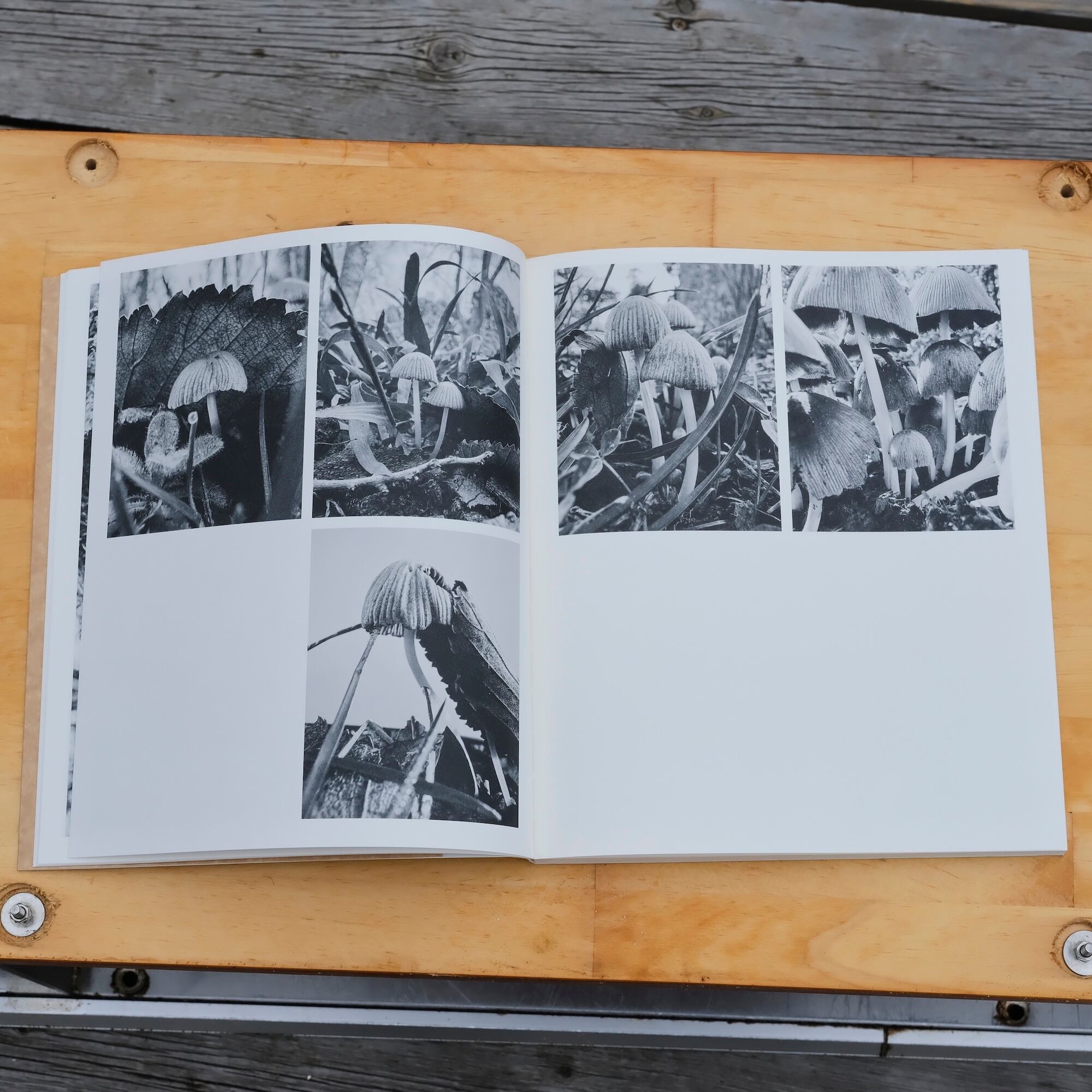
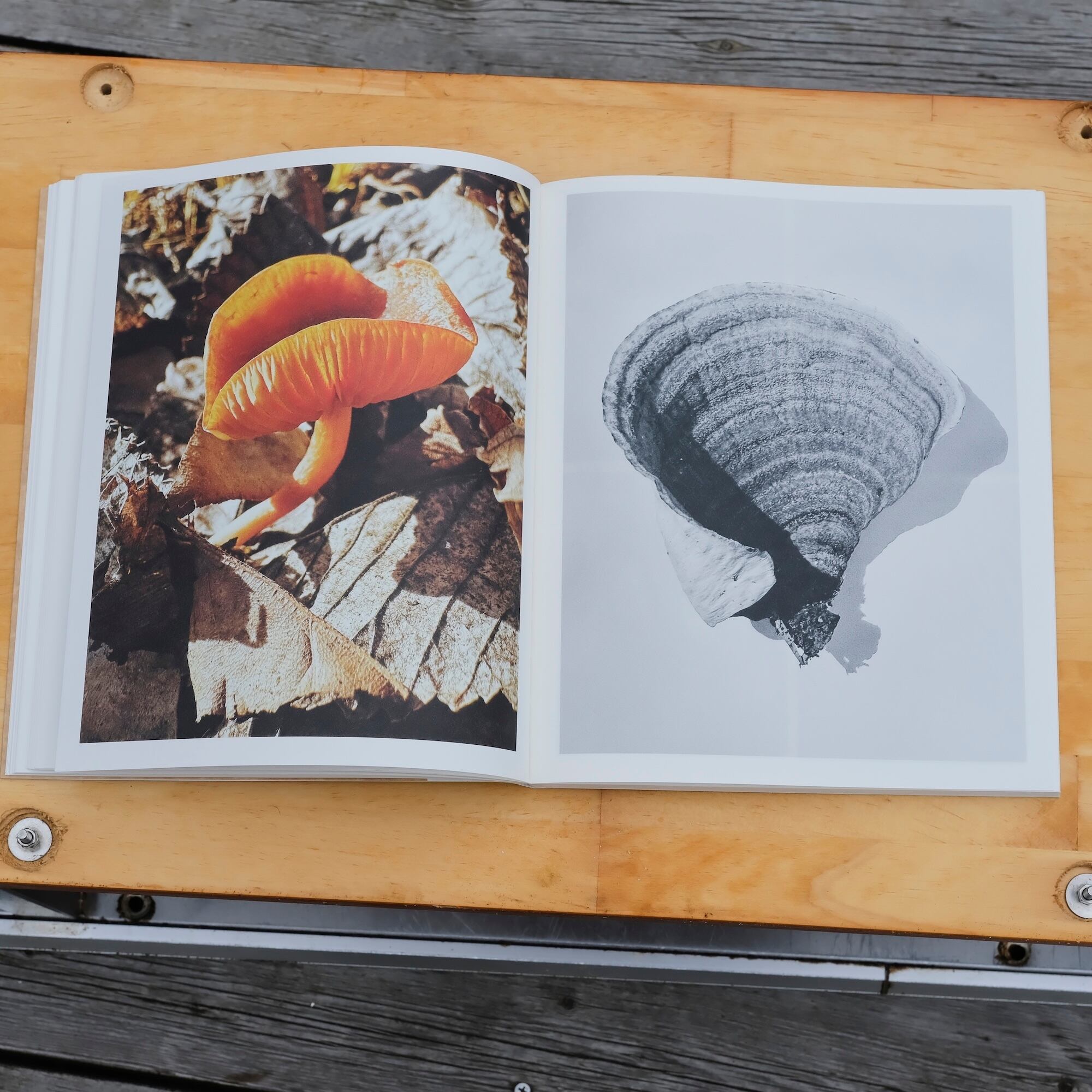
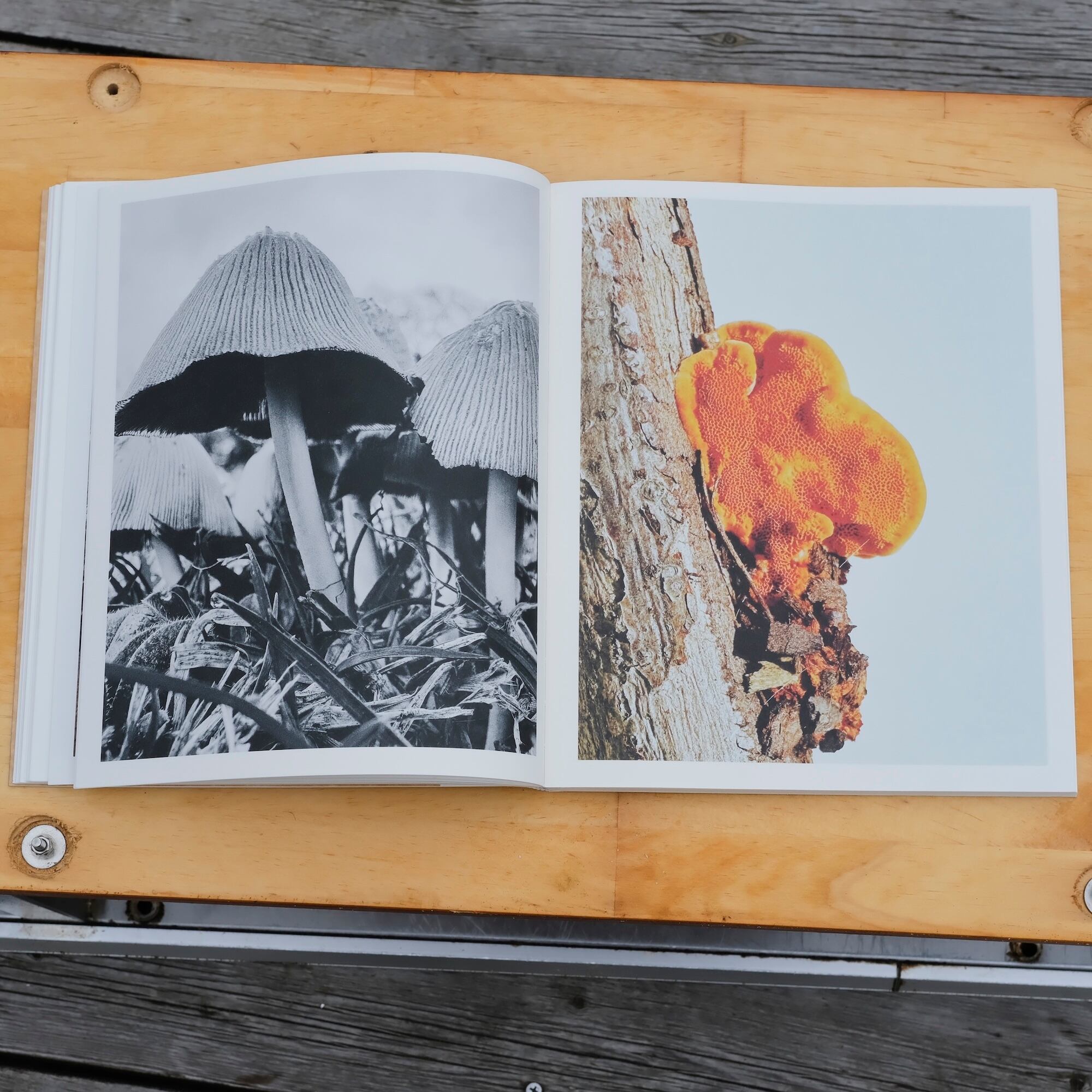
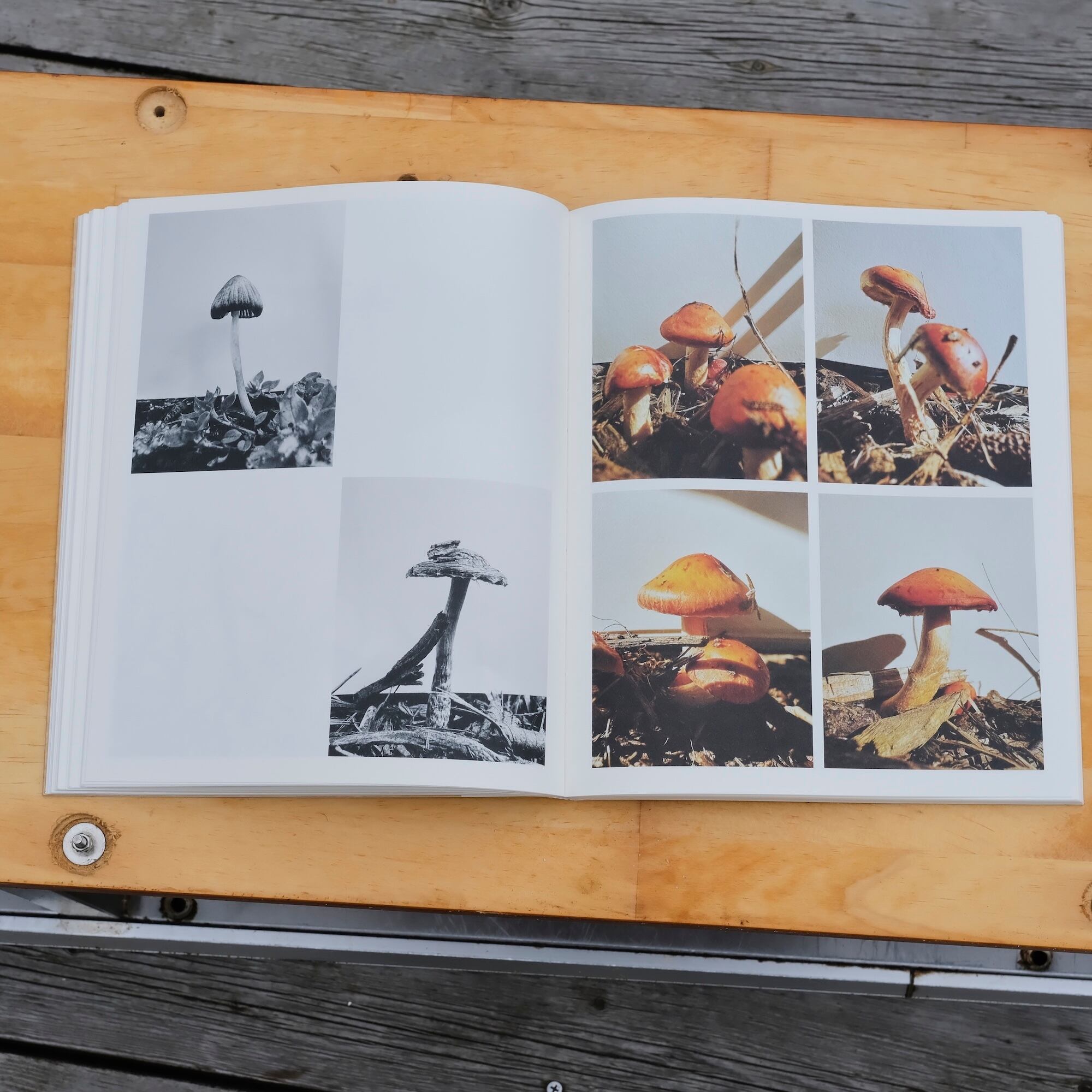
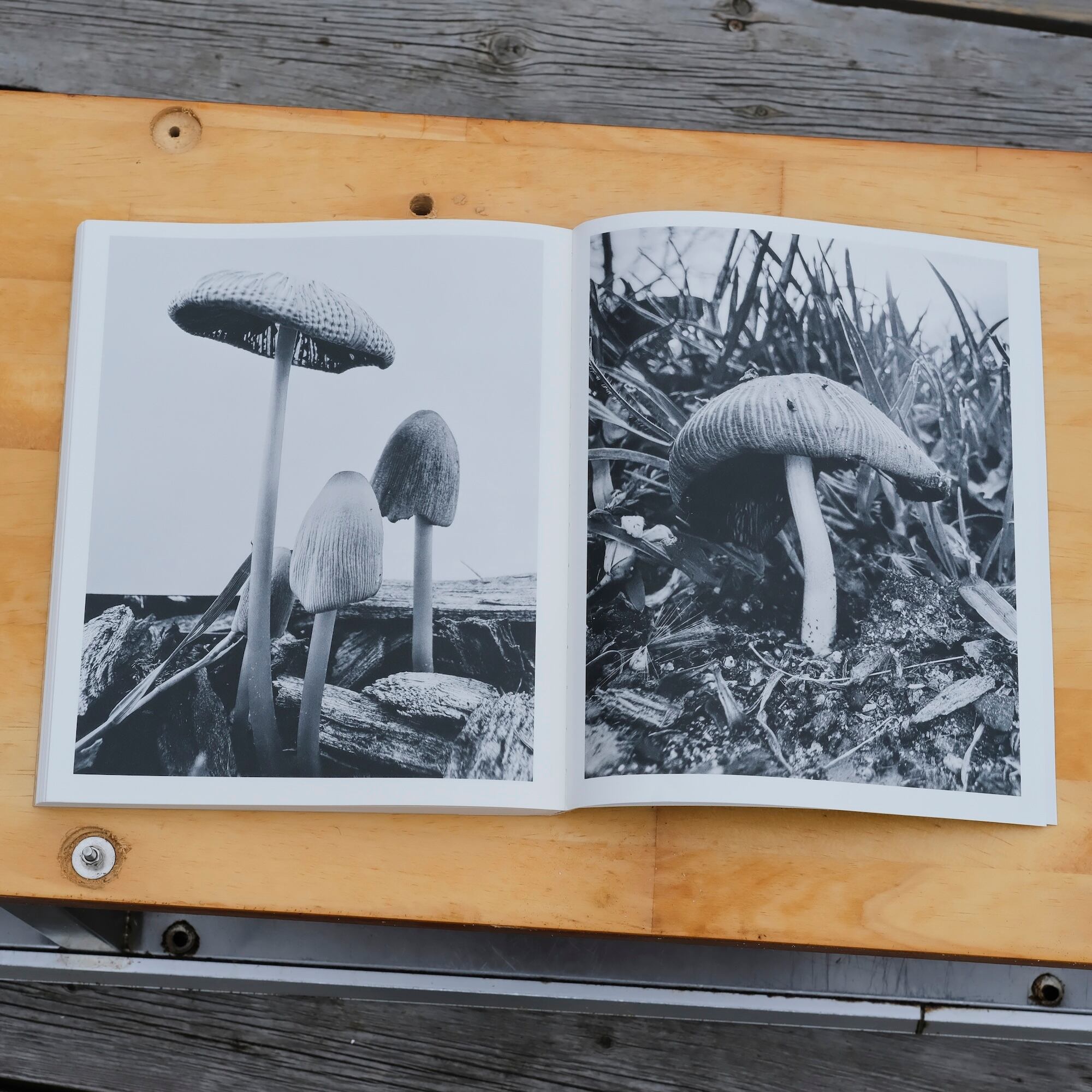
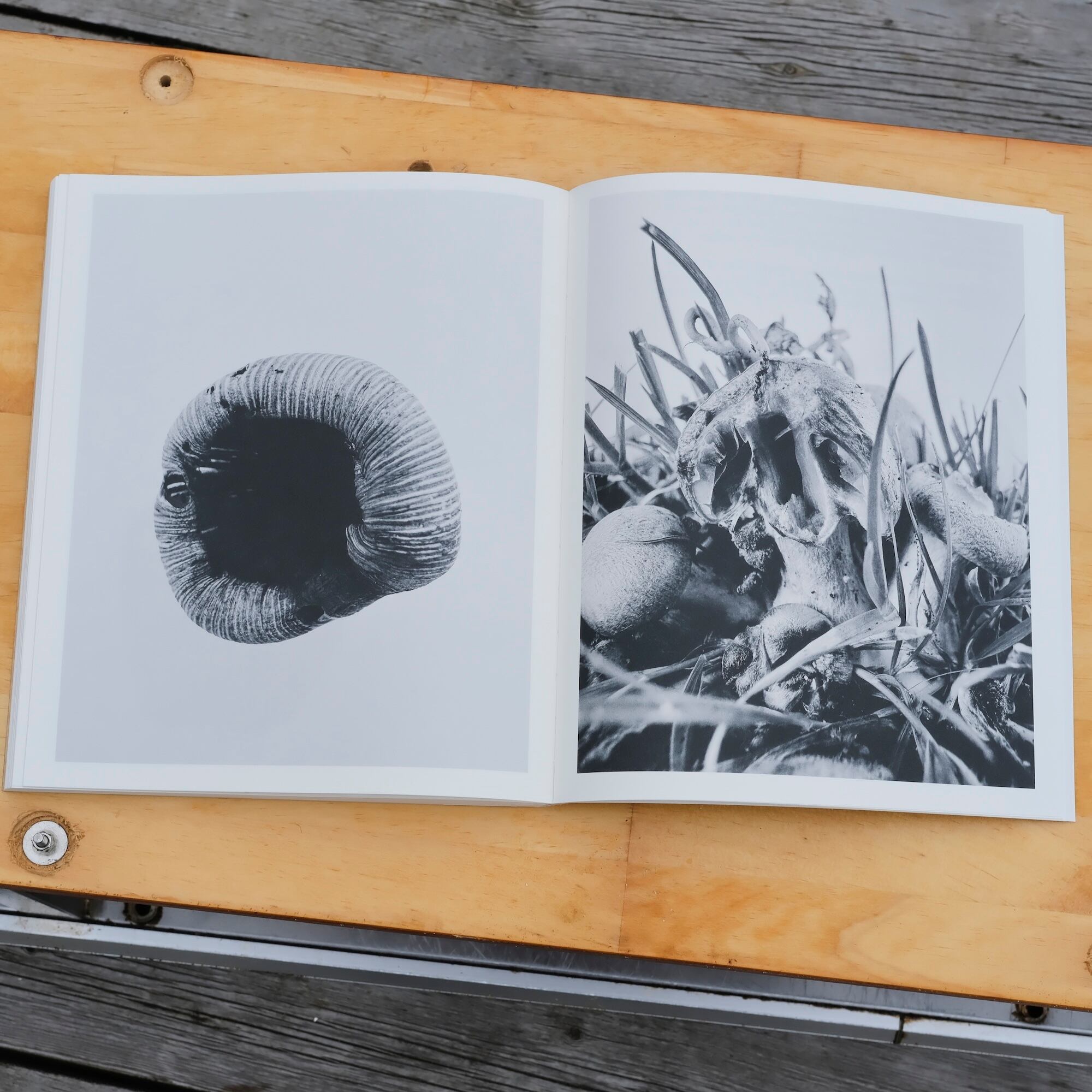
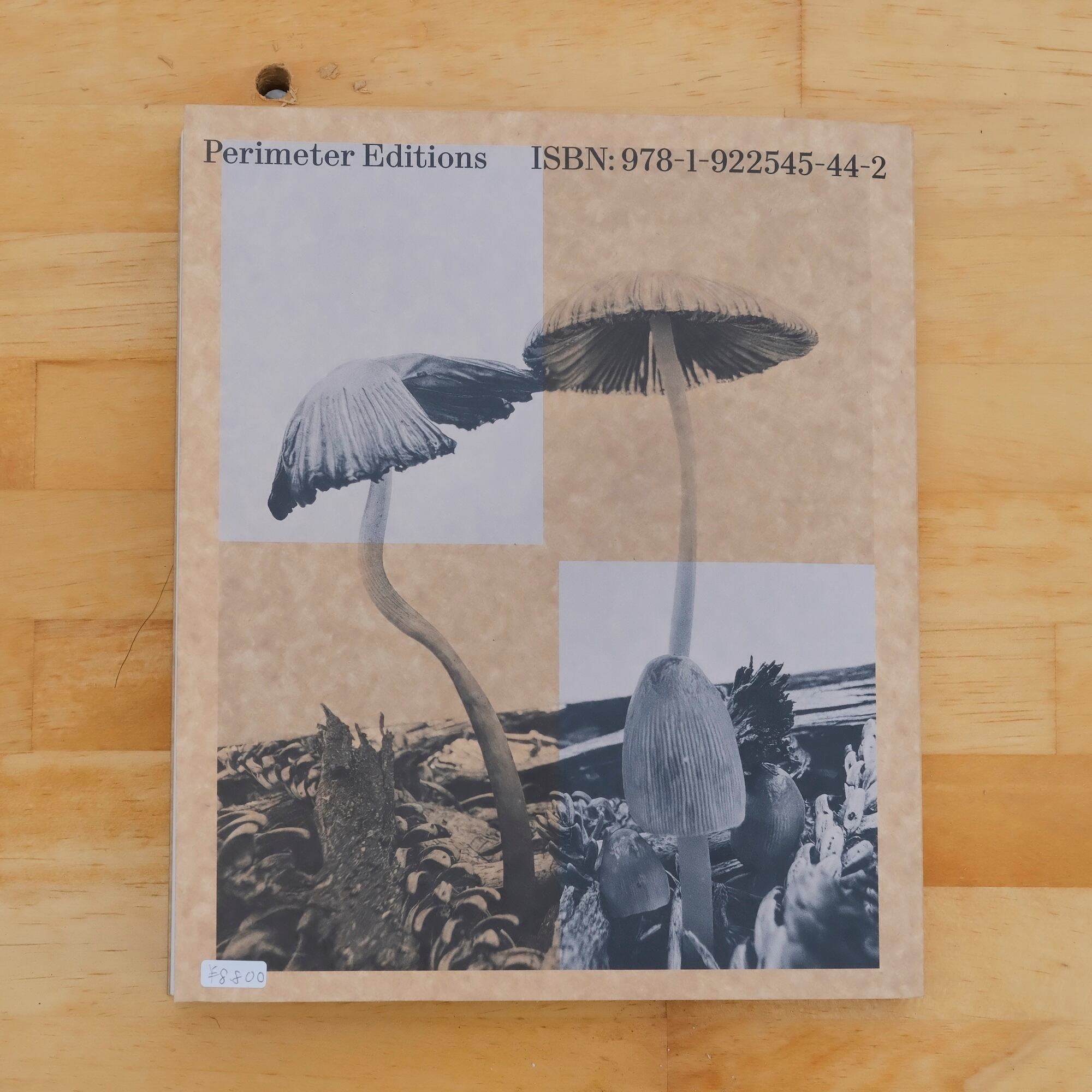
『Fruiting Bodies』は、キノコを生物学的形態であると同時にフェミニズム的メタファーとして捉え直し、女性の身体や豊かさをめぐる支配的な物語に問いを投げかける作品集である。メルボルンの自宅近くにある都市公園で撮影されたキノコたちは、群生し、朽ち、胞子を広げながら、誕生と死、成長と衰退の境界を曖昧にしていく。
前作『The Quickening』で妊娠から産後うつに至るまでの「母親になる過程」を深く掘り下げたアンは、本作で、生殖へのフェティシズムがどのように女性や自然、再生産に対する文化的認識を形成してきたのかを探究する。そして、成長や豊かさが常に生殖の論理に従うべきなのかを問い直す。
リゾマ的で集合的、そして撹乱的な「菌類的生殖観」を通じて、女性や自然を搾取してきた構造への対抗的な視点を提示する本書は、知的で共同体的、そして絶えず変容し続ける新たな豊かさの可能性を示す一冊である。
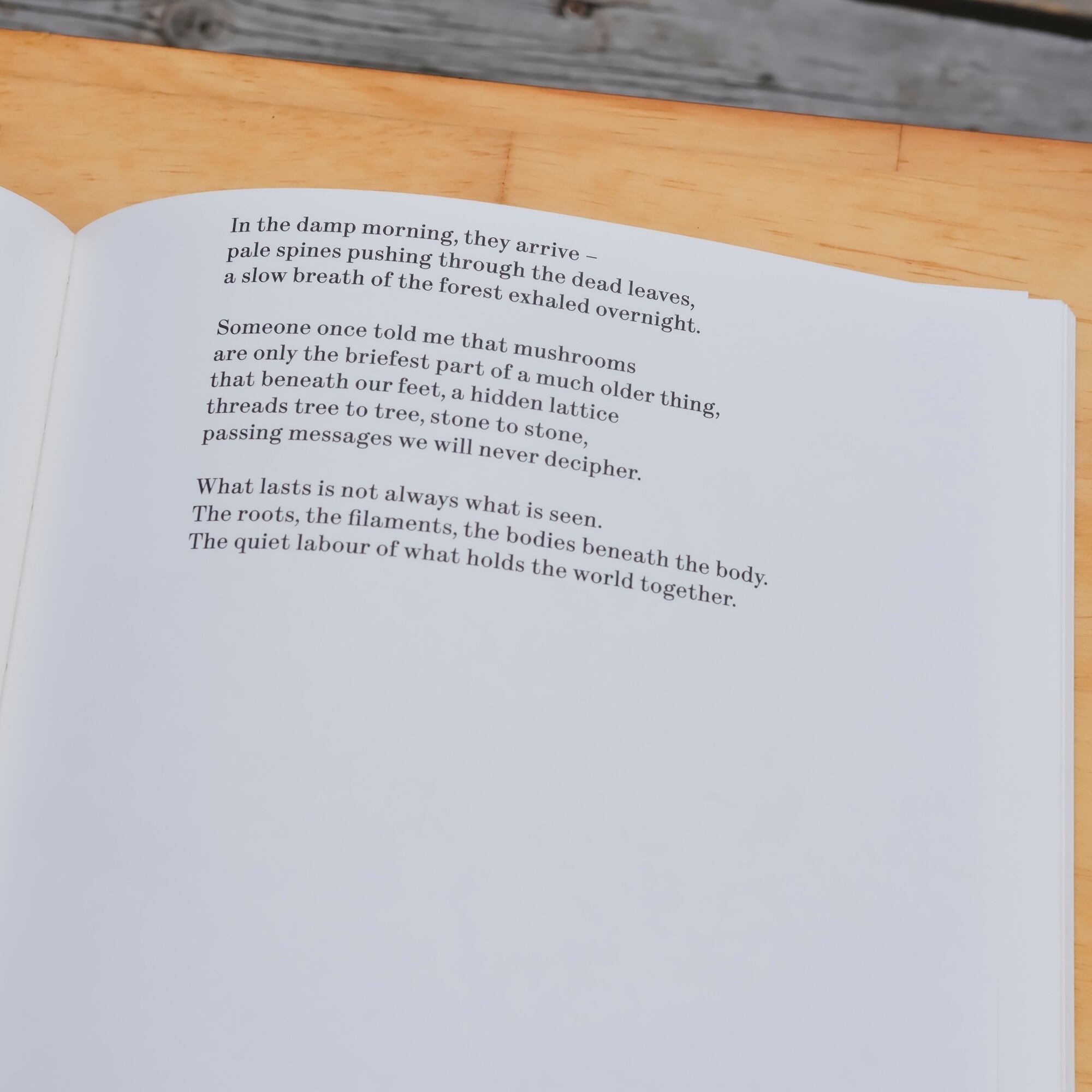
Ying Ang’s Fruiting Bodies reimagines the mushroom as both a biological form and a feminist metaphor – an emergent, generative force that challenges dominant narratives of fertility and the female body. Photographed while walking through inner-city parks close to the artist’s home in Melbourne, the series examines how the fetishisation of fertility has shaped cultural perceptions of women, nature and reproduction, questioning whether growth and abundance must always serve a reproductive imperative.
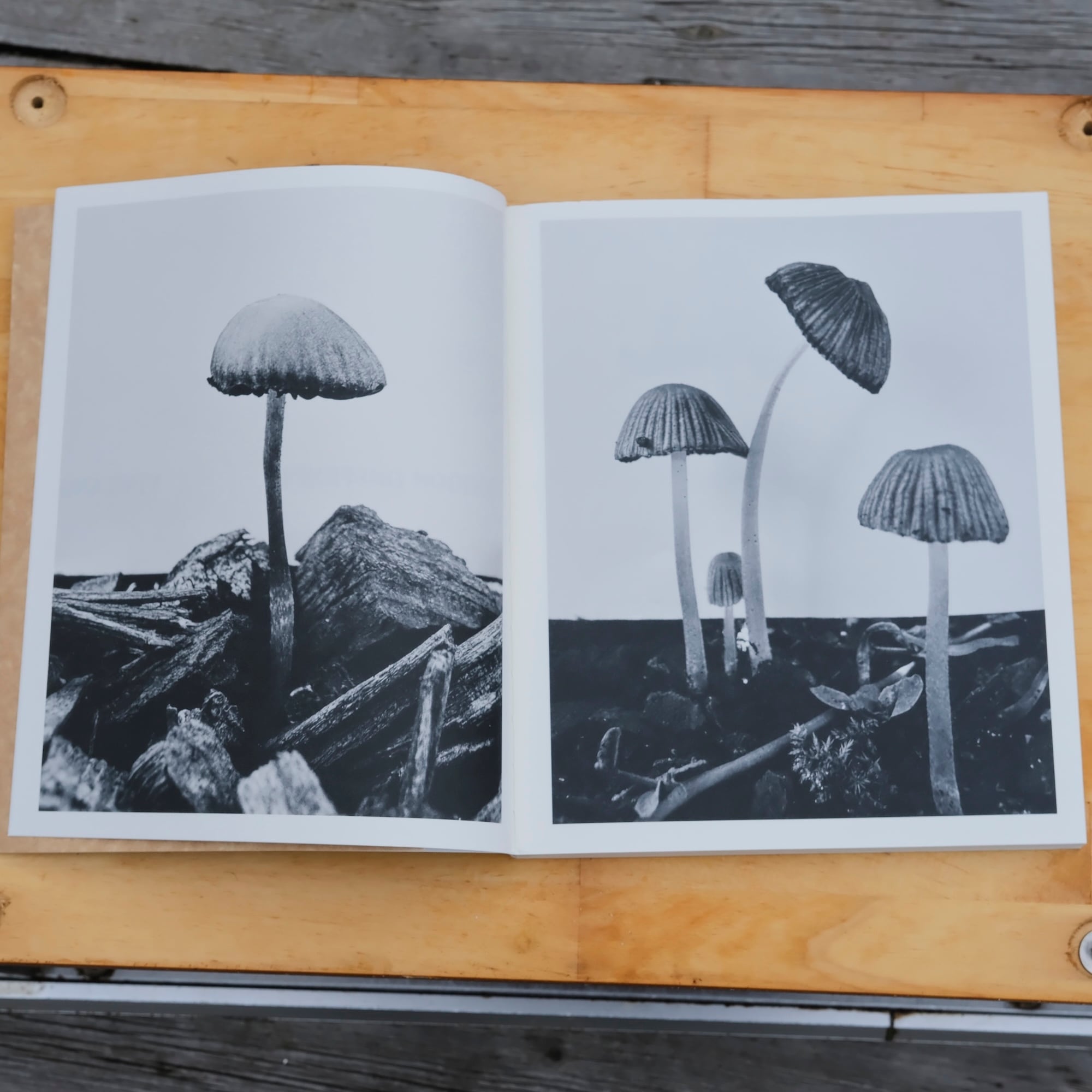
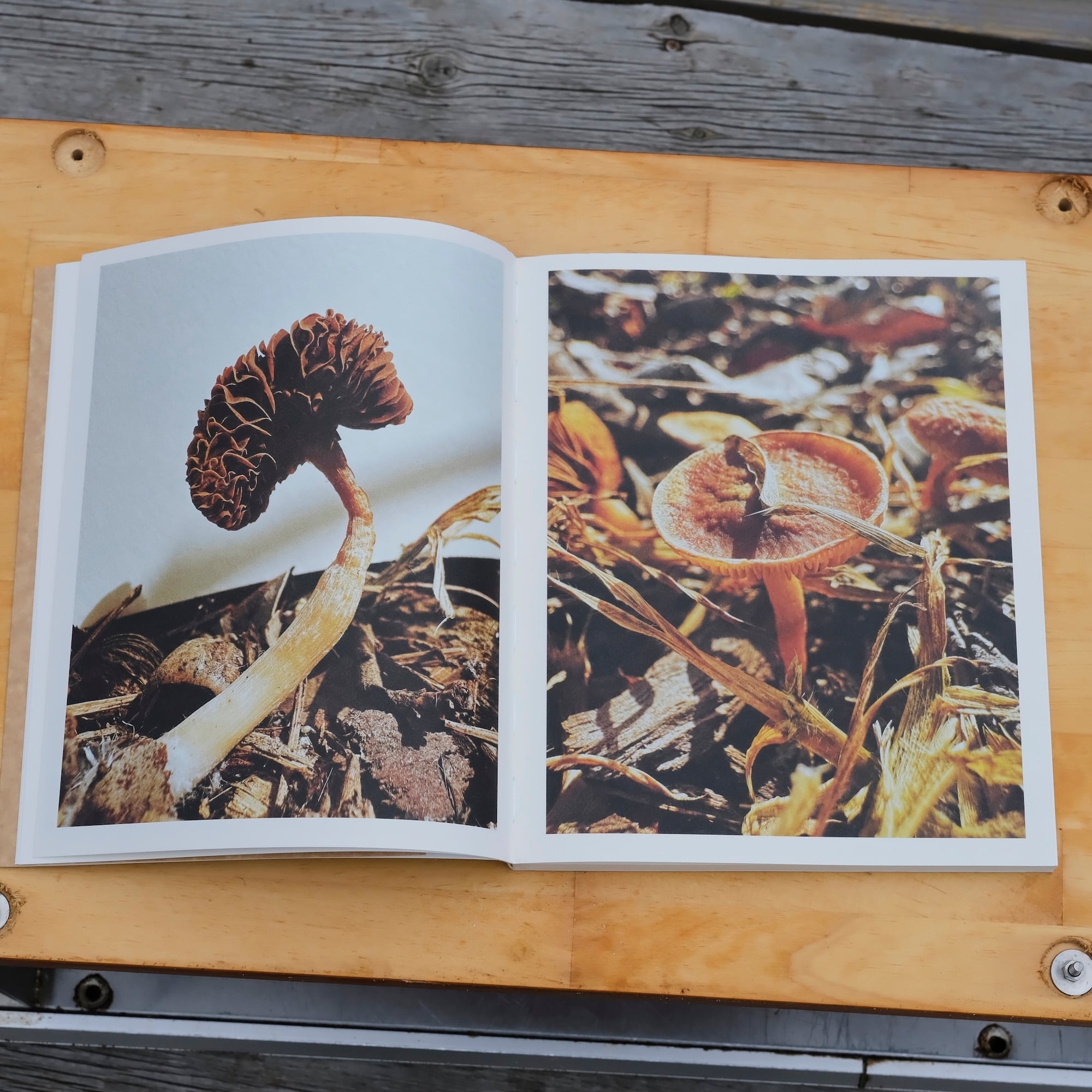
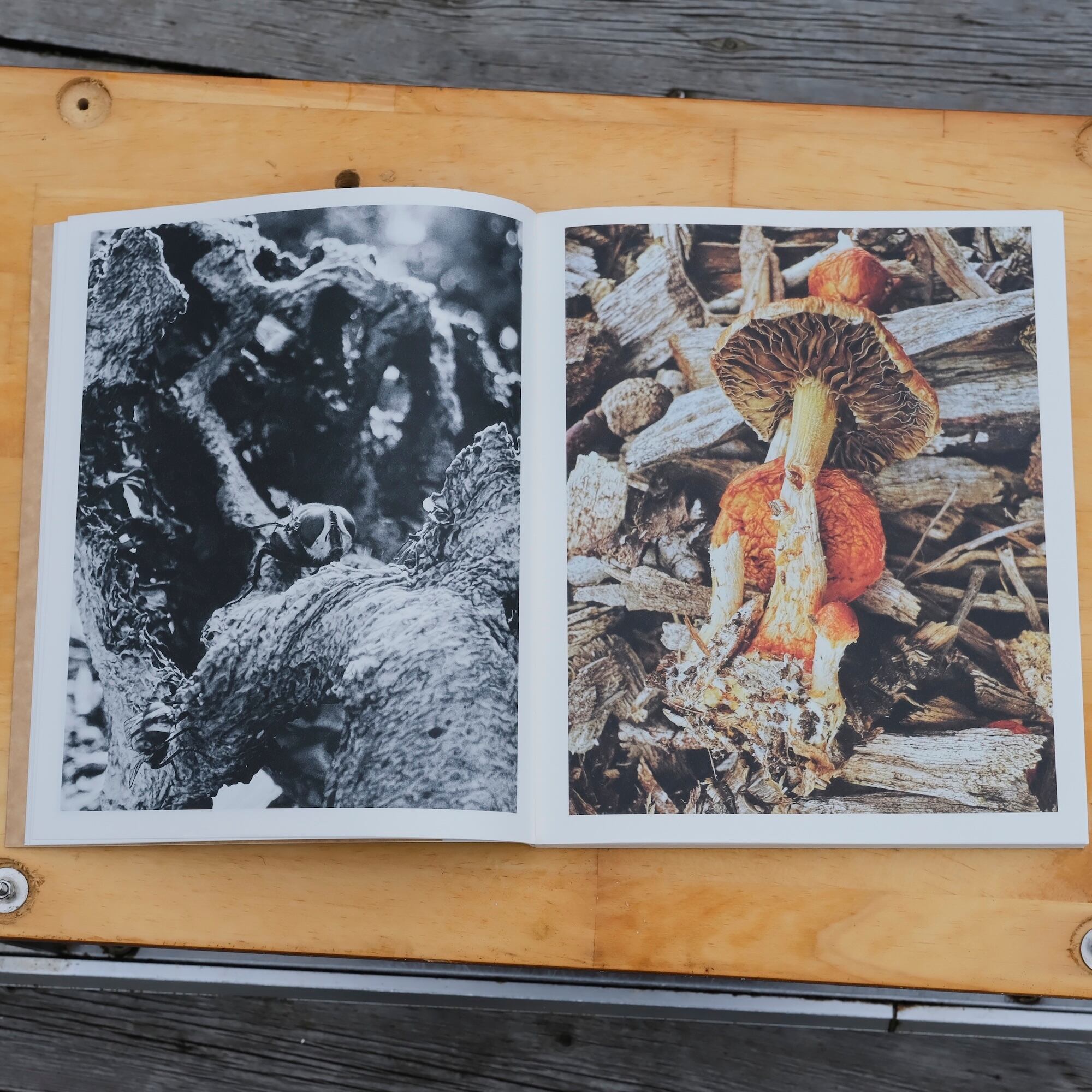
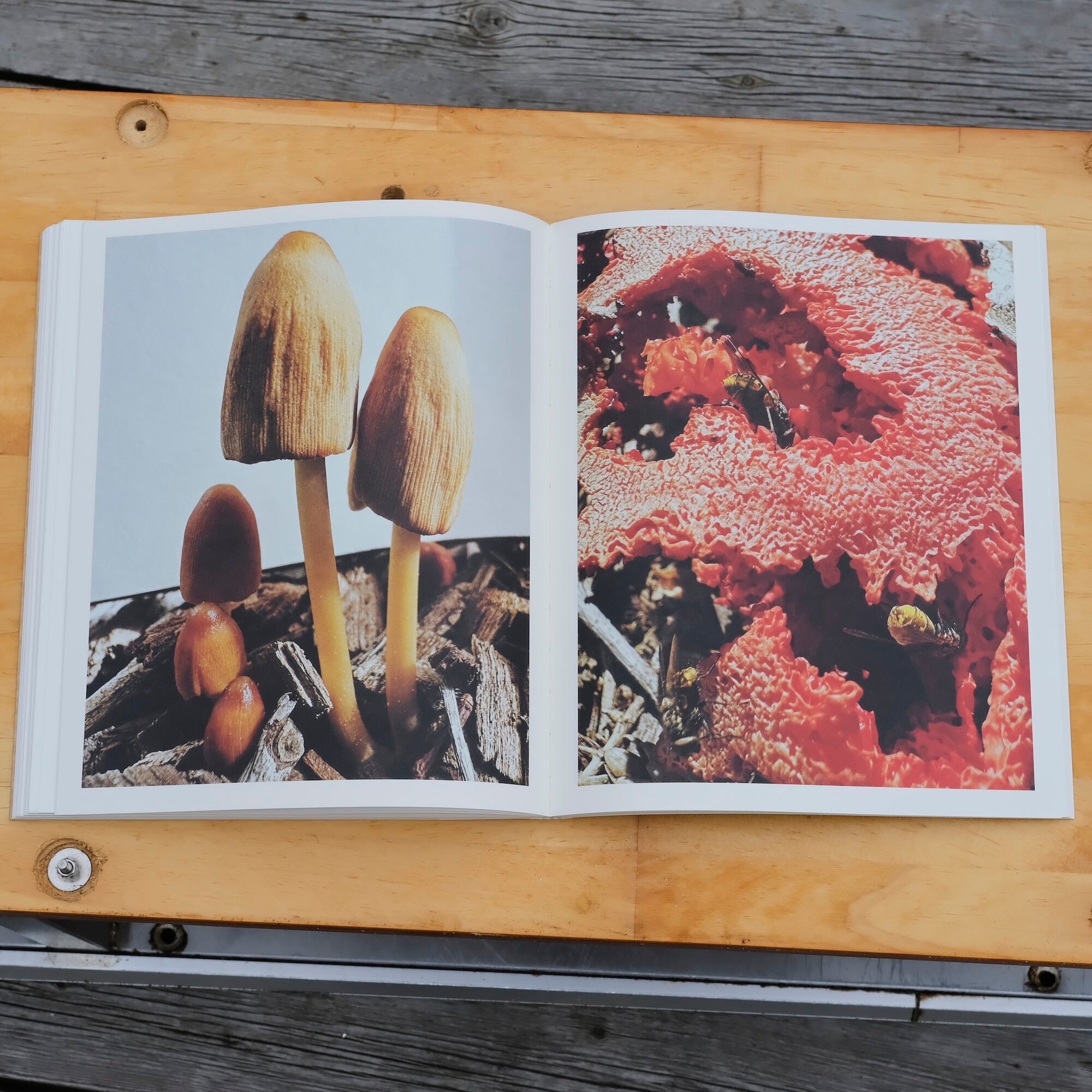
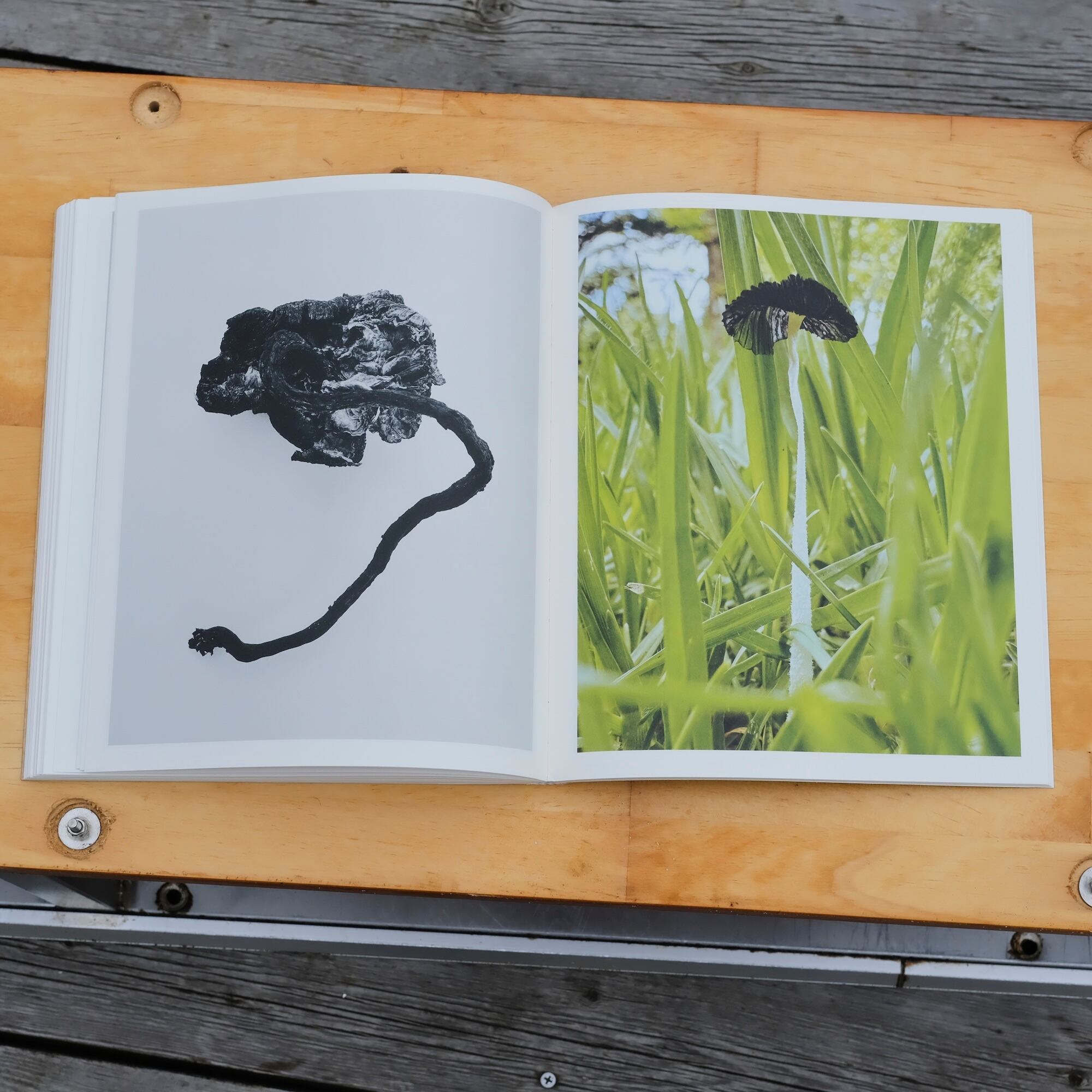
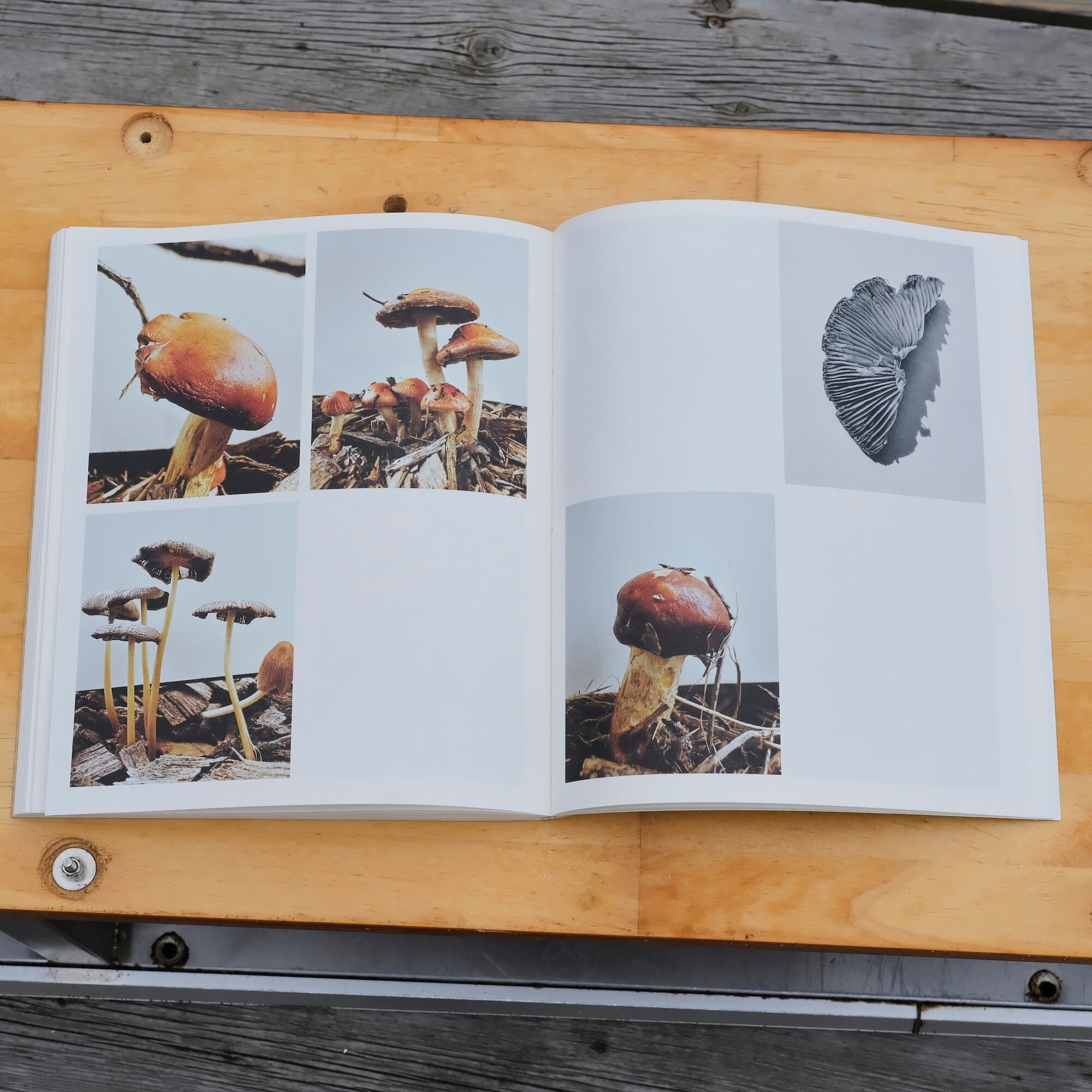
Ang’s photographs capture mushrooms in various states of emergence: solitary and erect; clustered in intimate pairs; decaying and dispersing spores. In these images, the fruiting body becomes an uncanny stand-in for the female form – soft yet resilient, sensuous, and categorically enigmatic. The undulating stems and textured caps – the act of pushing through and returning to the earth – evoke the eroticised, reproductive framing of the female body in art and culture, yet they also resist it. Unlike traditional fertility symbols that reinforce womanhood as a vessel for production, these mushrooms thrive in cycles of decay and renewal, blurring the boundaries between birth, death, and transformation.
Certain schools of evolutionary theory discuss the role of postmenopausal women, by reframing aging not as biological redundancy but as a vital stage of life that sustains and enriches communities, arguing that their continued existence beyond childbearing years serves a critical function: to pass on knowledge, wisdom,and cultural memory. Similarly, Fruiting Bodies – Ang’s first book for Perimeter Editions – finds power in the non-reproductive phases of life. Just as mycelium persists unseen beneath the forest floor, feeding, connecting, and shaping ecosystems, women beyond fertility continue to shape society in profound ways.
Ecofeminist scholars have long argued that patriarchal systems exploit both the earth and the female body through the same logic – one that demands constant output, control, and utility. Fruiting Bodies responds to this by embracing the fungal model: a form of fertility that is rhizomatic rather than hierarchical; collective rather than possessive; disruptive rather than obedient. Here, Ang challenges the fetishisation of fertility and proposes a different kind of reproductive power – one that is intellectual, communal, and ever-evolving.
Based in Melbourne, Australia, Ying Ang is a photographer and author with an extensive exhibition history and client base, having lived and worked in Singapore, Sydney and New York City. She is part of the teaching faculty at the International Center of Photography (NY), the Director of Reflexions 2.0, and a board member of the Centre for Contemporary Photography (Melbourne). Ying was also the co-founder and head curator of Le Space Gallery 2019–2024. Her two self- published artist books, Gold Coast (2014) and The Quickening (2021) garnered international critical acclaim, and were awarded and shortlisted for various high-profile prizes, including the New York Photo Festival and Encontros Da Imagem book prize, the Belfast Photo Festival 2021 book prize, the Tokyo International Foto Awards and the Prix Pictet award. Ying was a commissioned artist for PHOTO2022 International Festival of Photography and will exhibit at the 2025 Rencontres d’Arles festival in Arles, France.
Edition of 2000 copies
-
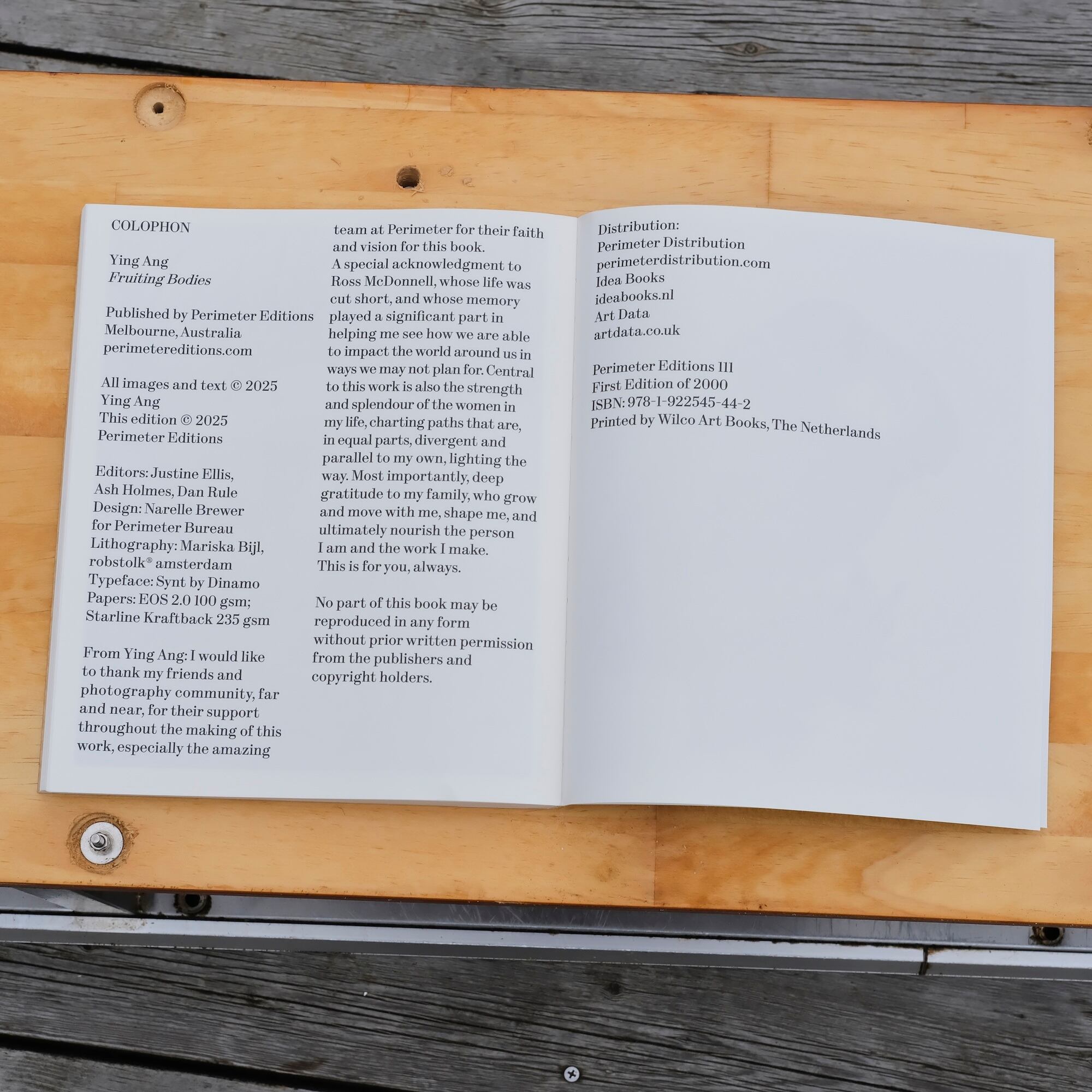
Title: Fruiting Bodies
Artist: Ying Ang
Publisher: Perimeter Editions, Melbourne, July 2025
Format: OTA bind softcover with flaps
Size: 230 × 270 mm
Pages: 160
Language: English
Edition: First edition of 2000 copies
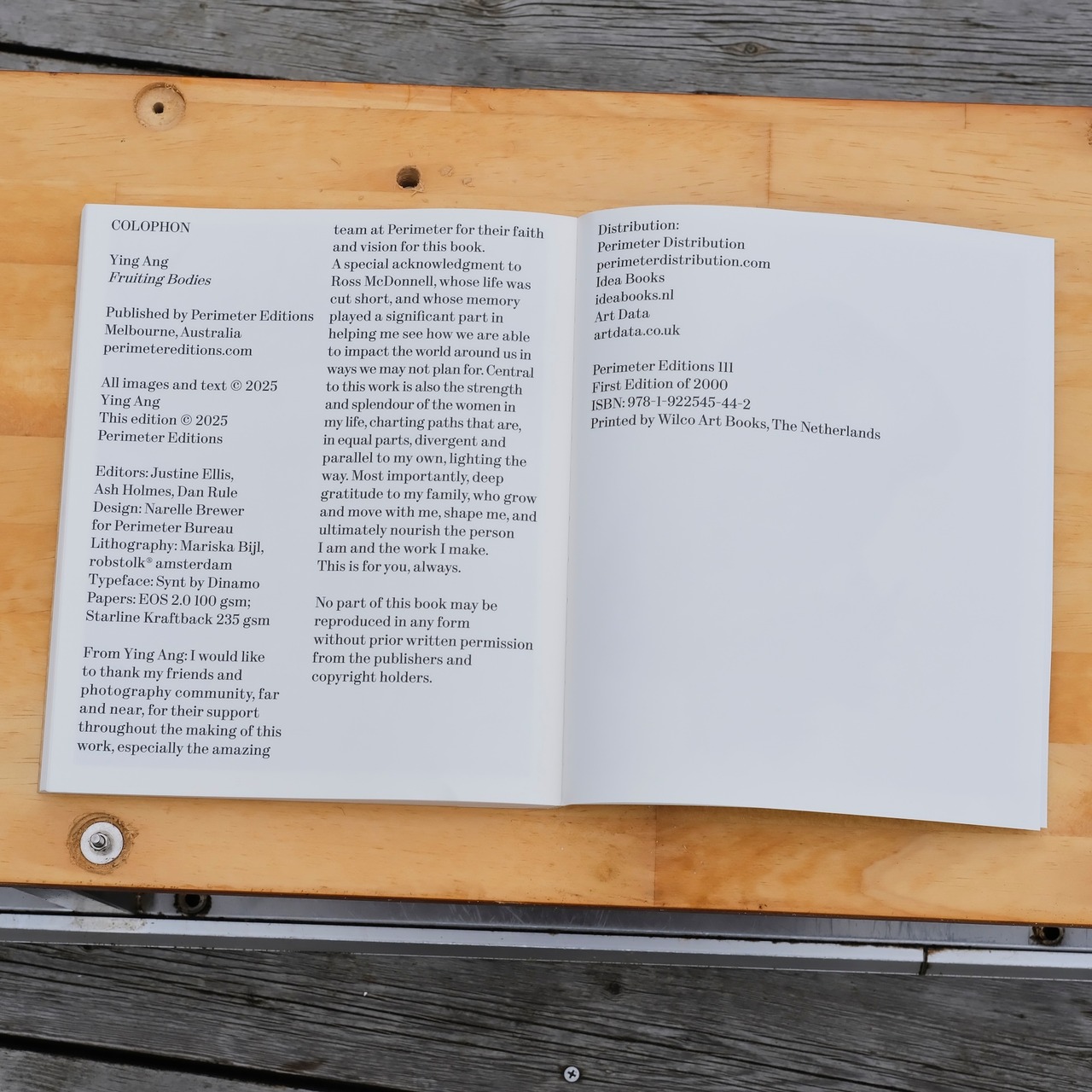
ISBN: 978-1-922545-44-2
-
レビュー
(3)
- レビュー(3)














¥8,800 ($56.49)